Chapter 3: Scenarios & Selection
Eight application scenarios with real-world deployment context, technical specifications, and configuration guidance
Environmental noise monitoring systems are deployed across a wide range of physical environments and regulatory contexts, each presenting distinct challenges for hardware selection, communications design, power architecture, and QA/QC configuration. This chapter presents eight representative application scenarios, each illustrated with a real-world deployment image and accompanied by a description, key technical indicators, and recommended configuration parameters. Understanding the specific requirements of each scenario is essential for producing a defensible, maintainable, and cost-effective system design.
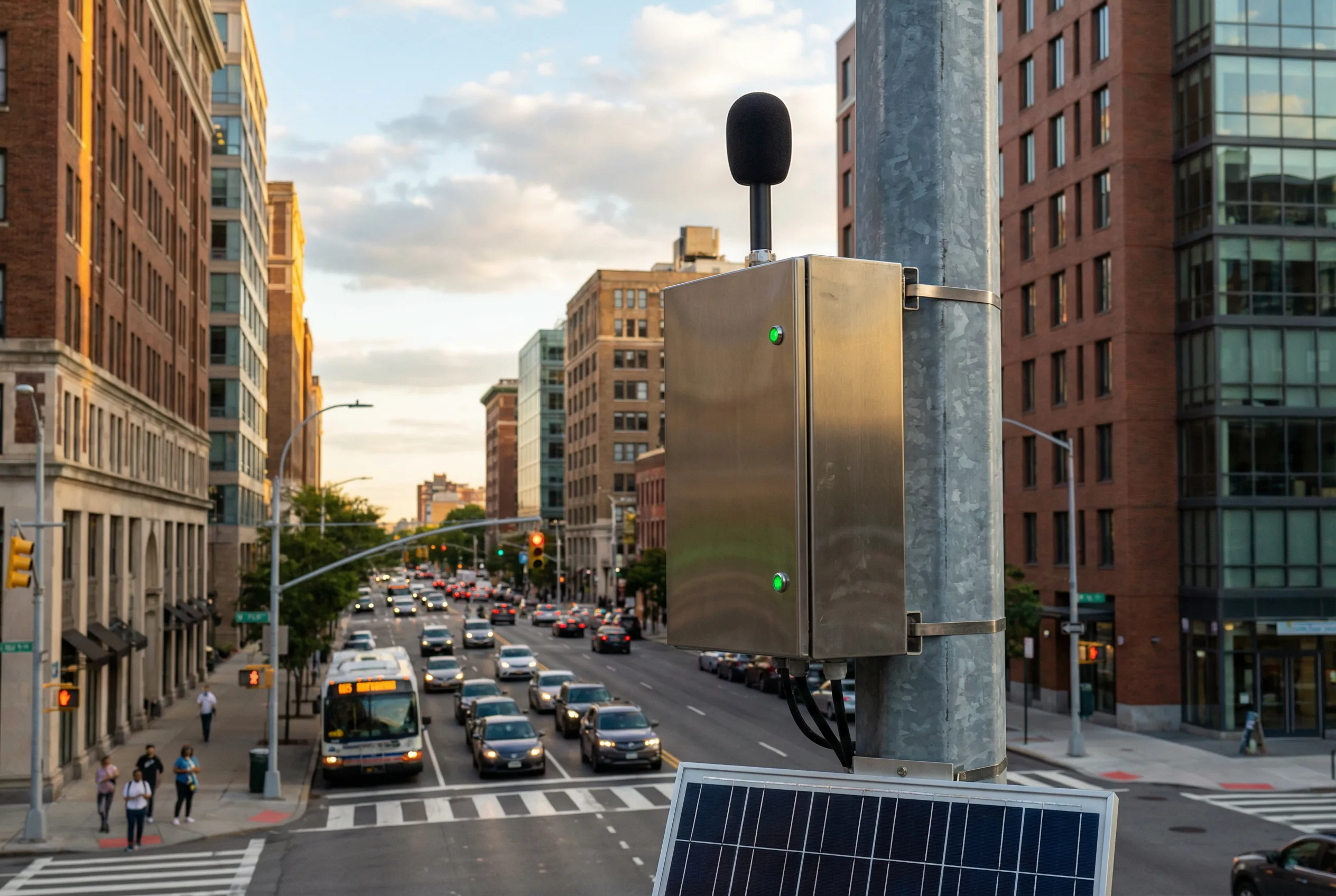
Urban road traffic noise monitoring stations are deployed along major arterial roads, expressways, and intersections to provide continuous, evidence-grade acoustic data for regulatory compliance, traffic management, and urban planning. These stations must withstand high vibration from heavy vehicles, elevated temperatures in direct sunlight, and the electromagnetic interference from traffic control systems. Microphone placement at 4 m height, 3.5 m from the road edge, is standard for free-field measurement per ISO 1996. Dual-SIM cellular connectivity provides uplink redundancy in dense urban environments where network congestion is common during peak hours.
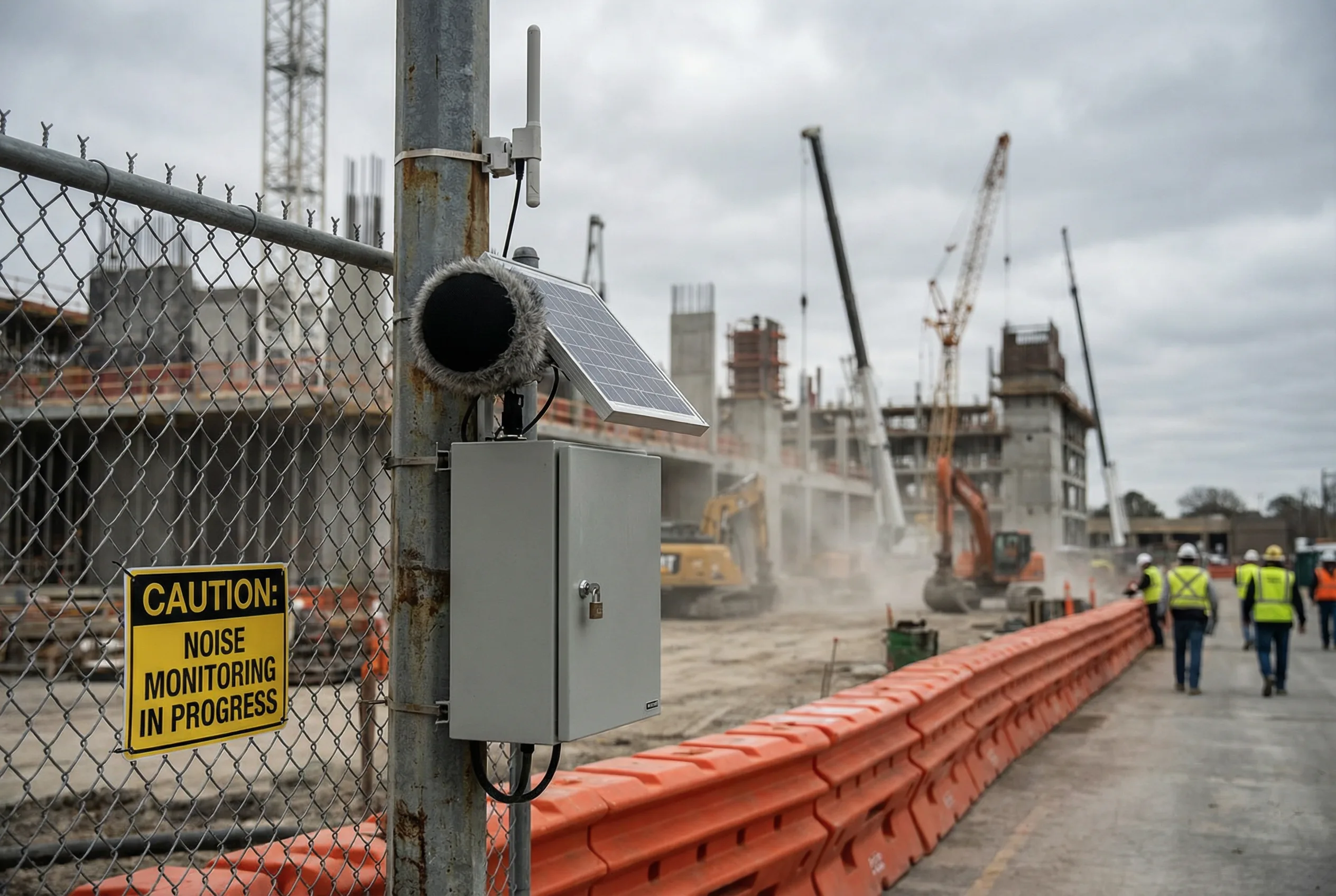
Construction site noise monitoring is typically deployed at the site boundary to verify compliance with permitted working hours and maximum noise limits. The monitoring system must handle high-amplitude impulsive events from pile driving, demolition, and heavy machinery, requiring a wide dynamic range and robust overload detection. Portable solar-powered stations are preferred for their flexibility as site boundaries evolve during project phases. Real-time alerting with SMS/email notification to site managers and regulators is essential for immediate corrective action. Wind and rain QA flags are critical to avoid false exceedances from weather events.
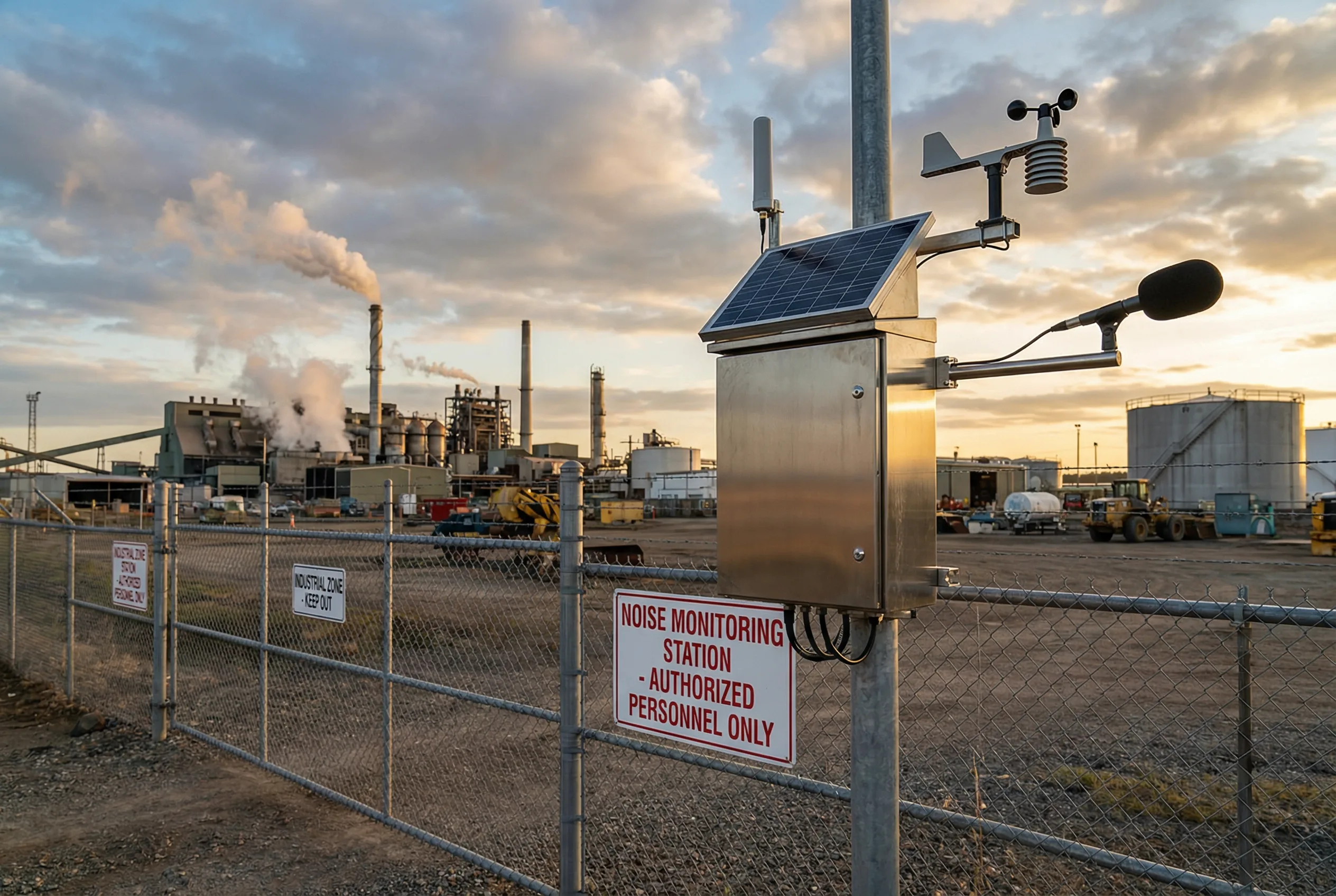
Industrial facility boundary monitoring is deployed at the perimeter of factories, refineries, power plants, and processing facilities to demonstrate compliance with environmental permits and respond to community complaints. The acoustic environment is characterized by tonal components (fans, compressors, cooling towers) and broadband machinery noise, making 1/3-octave spectral analysis valuable for source identification and tonal penalty assessment. Meteorological sensors (wind speed, wind direction, temperature, humidity) are integrated to apply wind-direction-based source correlation and to flag readings influenced by adverse weather. Corrosion-resistant stainless steel enclosures and marine-grade coatings are required in coastal and chemical plant environments.
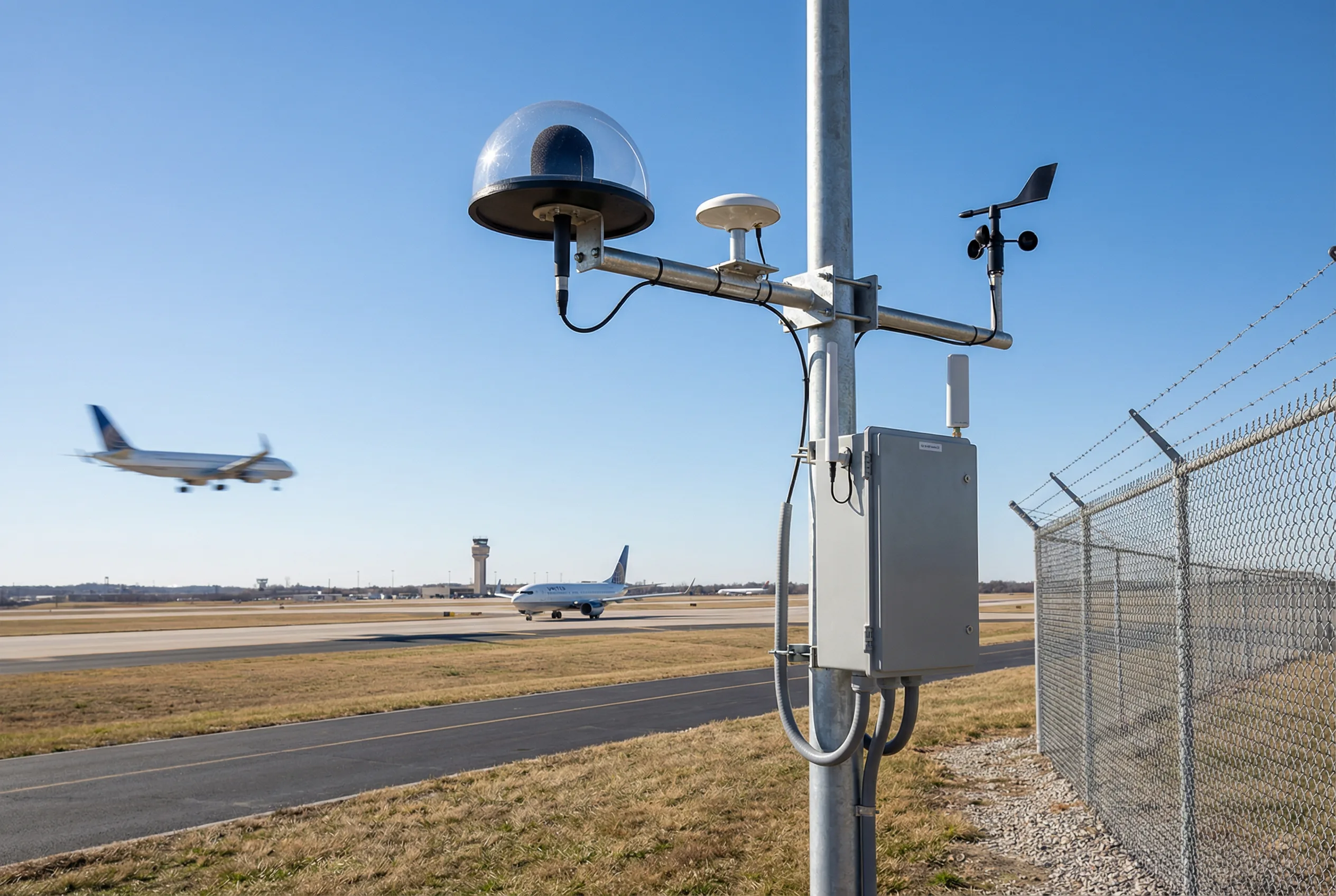
Airport noise monitoring networks are deployed around airport perimeters and in surrounding communities to track aircraft noise exposure, enforce noise abatement procedures, and support community engagement programs. These systems require precise GNSS timing to correlate acoustic events with flight track data from ADS-B or radar systems, enabling attribution of measured noise to specific aircraft types, routes, and operations. SEL (Sound Exposure Level) and EPNL (Effective Perceived Noise Level) calculations are standard metrics. The system must handle very high peak levels (up to 130 dB(A)) during low-altitude overflights while maintaining accuracy at background levels during quiet periods.
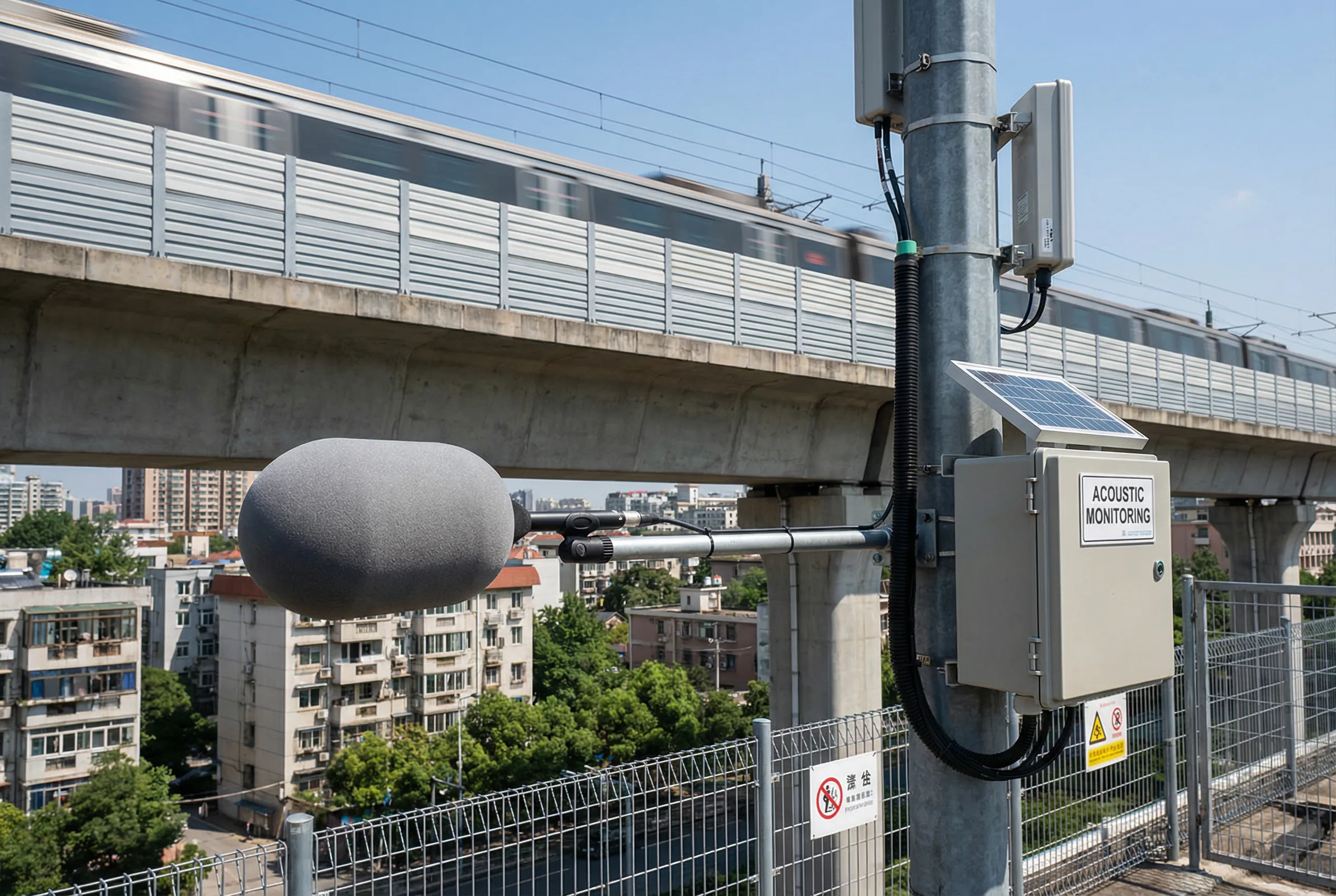
Rail and metro noise monitoring stations are installed adjacent to tracks, elevated structures, and at-grade crossings to assess compliance with railway noise standards and to support noise barrier effectiveness studies. The primary challenge is structural vibration transmitted through the mounting pole or wall, which can contaminate acoustic measurements if not properly isolated. Vibration-isolated microphone mounts and decoupled enclosure designs are essential. The electromagnetic environment near traction power systems and signaling equipment requires EMI-hardened electronics and shielded cables. Wheel squeal, rail roughness, and pass-by events are characterized using 1/3-octave spectra and SEL calculations.
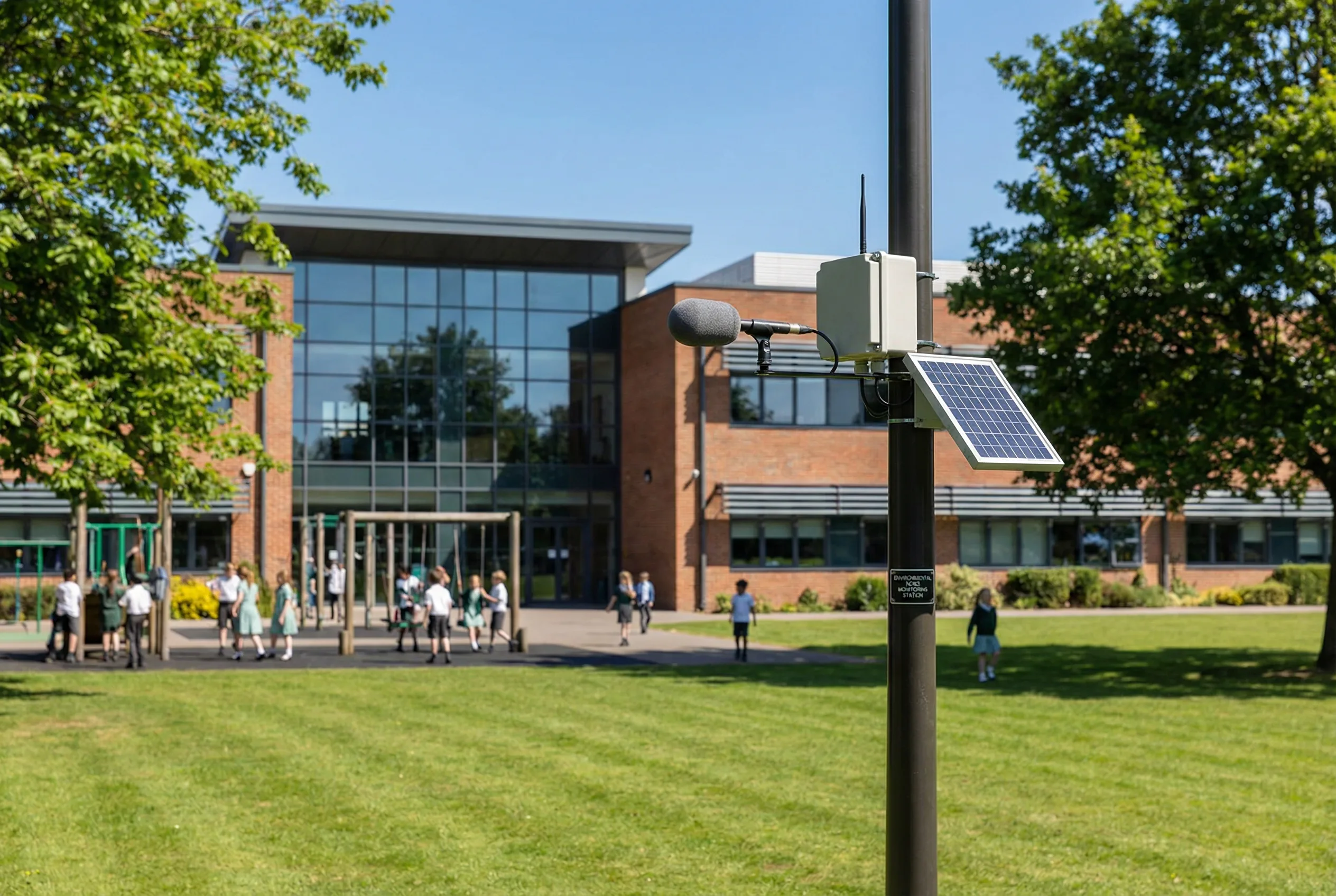
Sensitive receptor monitoring at schools, hospitals, residential care facilities, and parks focuses on protecting vulnerable populations from excessive noise exposure during critical hours. These deployments require low-visibility, aesthetically unobtrusive designs that blend with the environment. Privacy considerations are paramount — no audio recording capability is permitted in these locations, and only SPL metrics are collected. The system must accurately capture low-level background noise (as low as 25 dB(A)) and provide time-of-day analysis to identify noise sources affecting teaching hours, sleep periods, and quiet zones. Integration with school timetables and hospital shift schedules enables context-aware alerting.
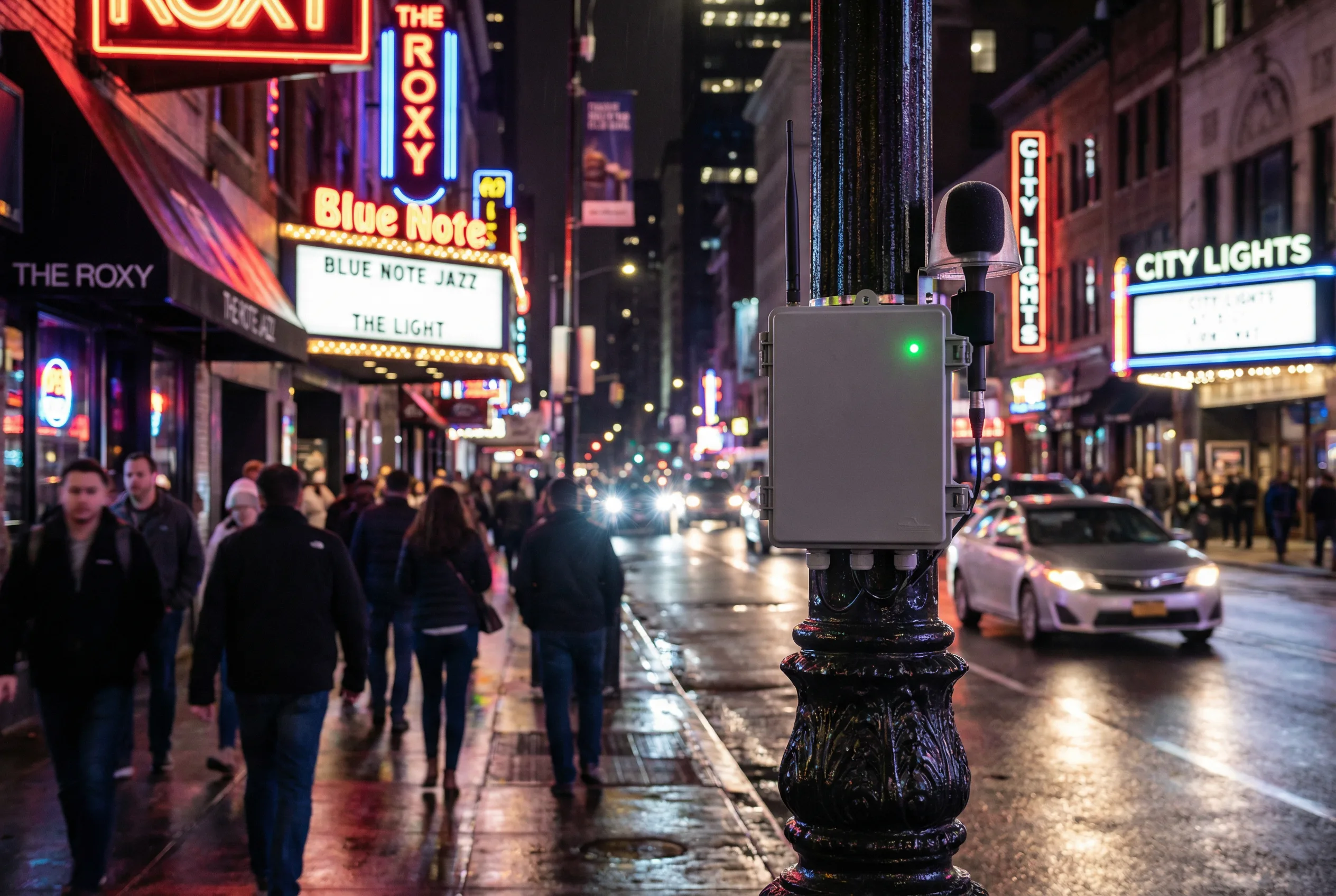
Commercial and entertainment district monitoring addresses the complex acoustic environment of bar and restaurant precincts, music venues, outdoor markets, and event spaces where nighttime noise is a primary community concern. These stations must be vandal-resistant (IK10 rating) and operate reliably in environments with high humidity from crowds, spilled liquids, and cleaning activities. The system supports complaint-driven workflows where residents can trigger event investigations, and provides evidence for license conditions and late-night trading permits. Time-period analysis (day, evening, night per WHO/EU guidelines) and percentile statistics (L10, L50, L90) are key outputs for enforcement action.
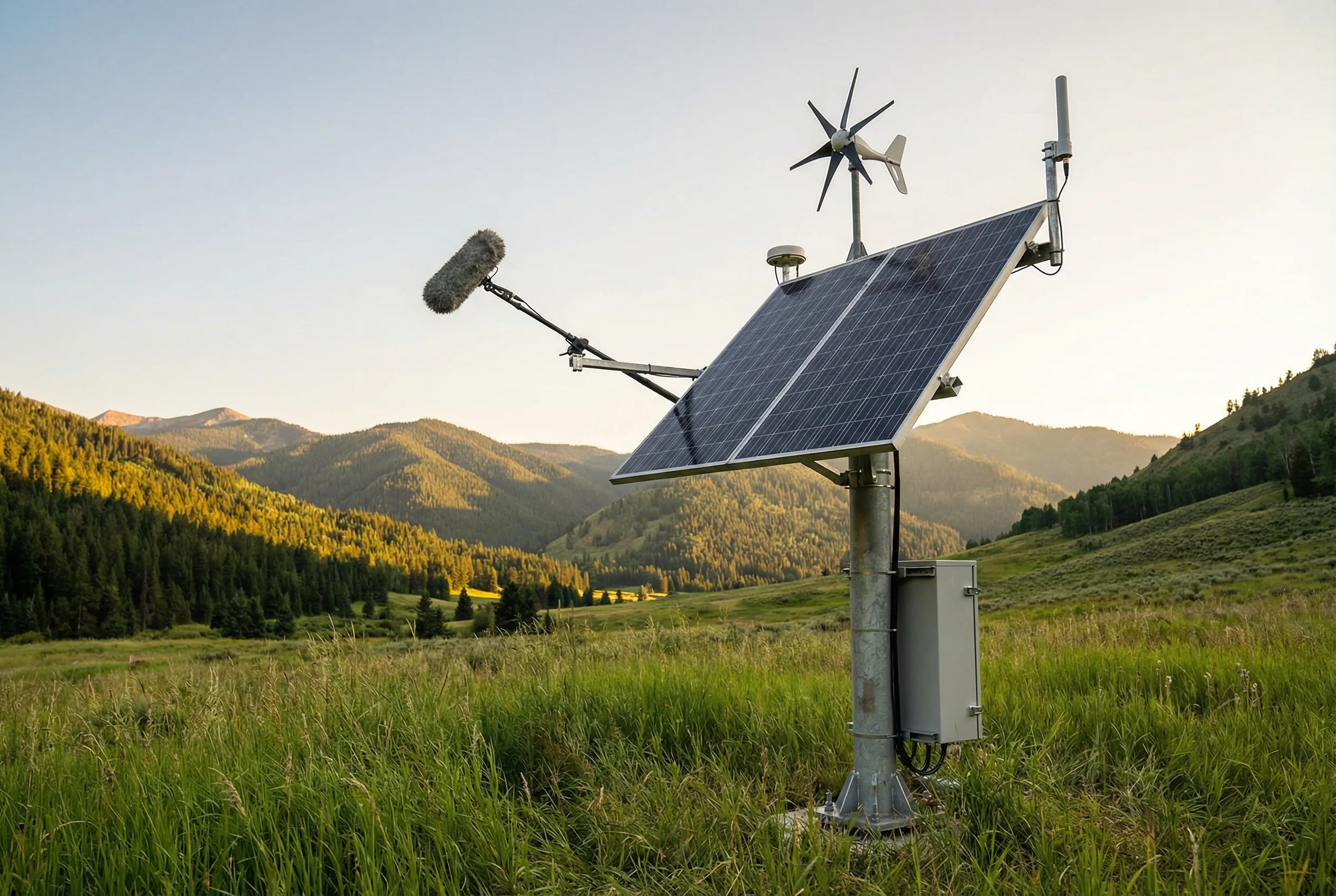
Remote area and nature reserve noise monitoring stations are deployed in locations with no grid power, no cellular coverage, and difficult physical access. These systems must be entirely self-sufficient, combining solar panels with wind turbines and high-capacity LiFePO4 battery banks sized for worst-case winter irradiance and extended cloudy periods. Satellite communications (Iridium, Starlink, or similar) provide uplink connectivity where cellular is unavailable. GNSS provides precise time synchronization without network dependency. The acoustic environment is characterized by very low background levels (15–30 dB(A)), requiring ultra-low-noise microphones and careful windscreen design to avoid contamination from even light winds.
3.9 Scenario Comparison Summary
The table below provides a consolidated comparison of the eight application scenarios across the most critical design dimensions. Use this table as a quick reference during the design selection phase to identify the appropriate configuration package for a given deployment context.
| Scenario | Class | Power | Connectivity | Key Metrics | Special Requirements |
|---|---|---|---|---|---|
| Urban Traffic | Class 1 | Grid + Solar | Dual-SIM 4G/5G | LAeq, Lmax, L10/L90 | Vibration, EMI, sunshield |
| Construction | Class 1 | Solar + Battery | 4G + WiFi | LAeq, Lmax, SEL | Portable, real-time alert |
| Industrial | Class 1 | Grid + UPS | Fiber + Cellular | LAeq, 1/3-octave, tonal | Met sensor, corrosion-resistant |
| Airport | Class 1 | Grid | Fiber + Cellular | SEL, LAmax, EPNL | GNSS, flight track correlation |
| Rail/Metro | Class 1 | Grid or PoE | 4G + Ethernet | LAeq, SEL, 1/3-octave | Vibration isolation, EMI |
| School/Hospital | Class 1 | Solar or PoE | 4G or WiFi | LAeq, Lnight, L90 | Low-noise mic, no audio, slim pole |
| Entertainment | Class 1/2 | Grid AC | Dual-SIM 4G | LAeq, Lnight, L10/L90 | IK10, anti-graffiti, complaint API |
| Remote/Nature | Class 1 | Solar + Wind + Battery | Satellite | LAeq, L90, spectra | Ultra-low noise mic, GNSS, −40°C |