Environmental Noise Monitoring System Design Guide
A comprehensive engineering reference for designing, deploying, and operating evidence-grade environmental noise monitoring systems across urban, industrial, transport, and sensitive receptor environments.
System Overview
An Environmental Noise Monitoring System (ENMS) is an engineered combination of field acoustic sensing, reliable telemetry, data quality control (QA/QC), analytics, and regulatory integration used to continuously observe noise levels and spectral characteristics across diverse urban and industrial scenarios. The system targets functional zones, road traffic corridors, rail transit, construction sites, industrial boundaries, commercial streets, airport surroundings, and sensitive receptors such as schools, hospitals, and residential areas.
Its engineering objective in complex outdoor environments and multi-source superposition is to achieve accurate measurement, stable transmission, locatable evidence, interpretable results, traceability, and operational maintainability — while meeting standards for metrology, calibration, data integrity, and audit logging required for enforcement-grade workflows. The system scope covers fixed stations and optional mobile stations; continuous SPL metrics and optional spectral analysis; station health monitoring; threshold alerting and event workflows; QA/QC; reporting; and integration with regulator platforms and GIS.
System Architecture
The ENMS follows a three-tier cloud-edge-field architecture. Field nodes perform acoustic capture and local buffering; an optional edge gateway provides protocol bridging and offline resilience; the central platform handles ingestion, QA/QC, analytics, alerting, and regulatory integration. The diagram below illustrates the layered responsibilities and key data flows between each tier.
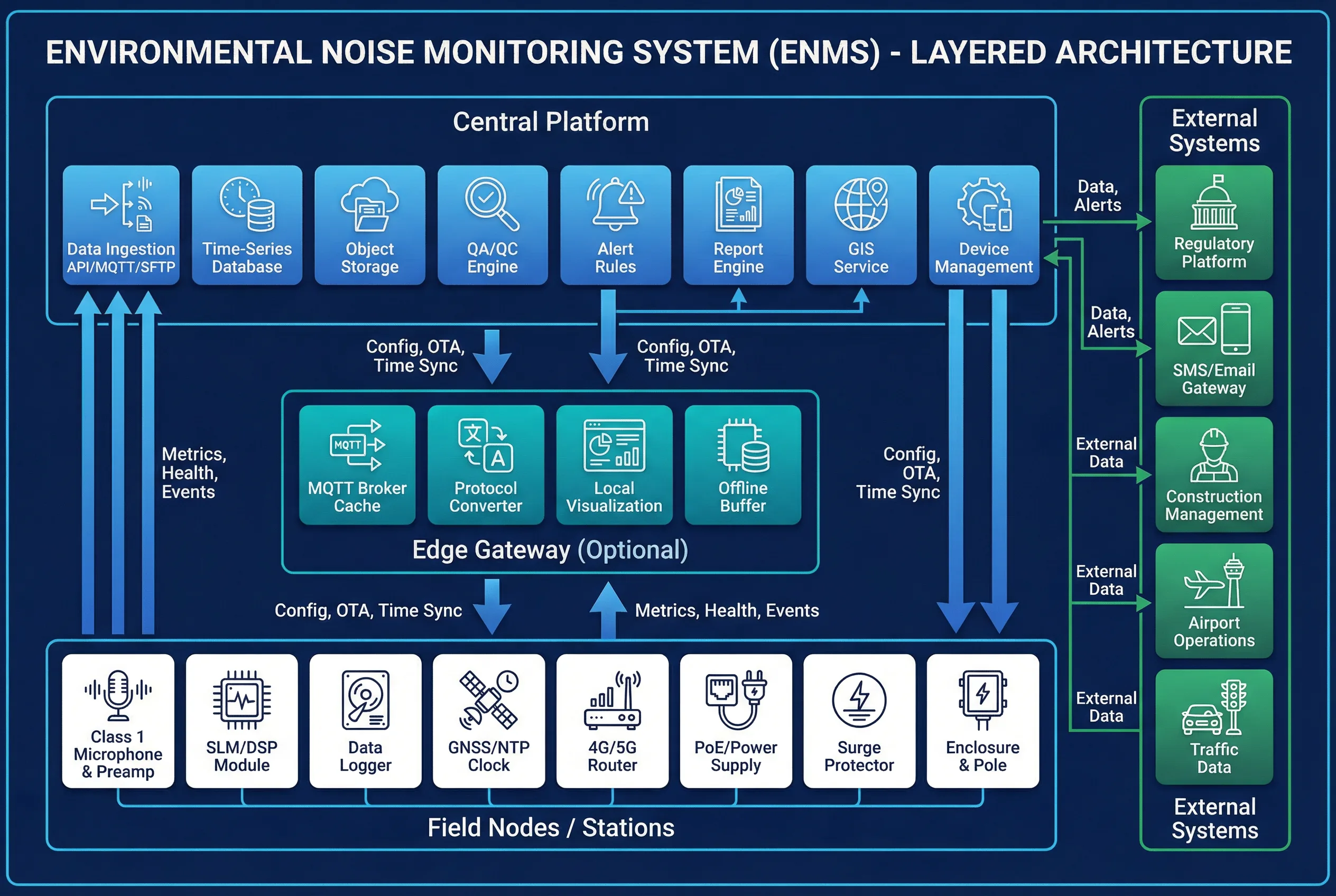
Figure 0.1: ENMS Layered Architecture — Field Nodes, Edge Gateway (Optional), Central Platform, and External Systems
Main Functions
The ENMS platform delivers seven core functional capabilities organized around continuous acoustic data collection, automated quality assurance, real-time alerting, source explainability, regulatory evidence generation, fleet operations management, and cross-cutting security controls. These functions work together to provide defensible, actionable noise data for compliance, enforcement, and urban planning purposes.
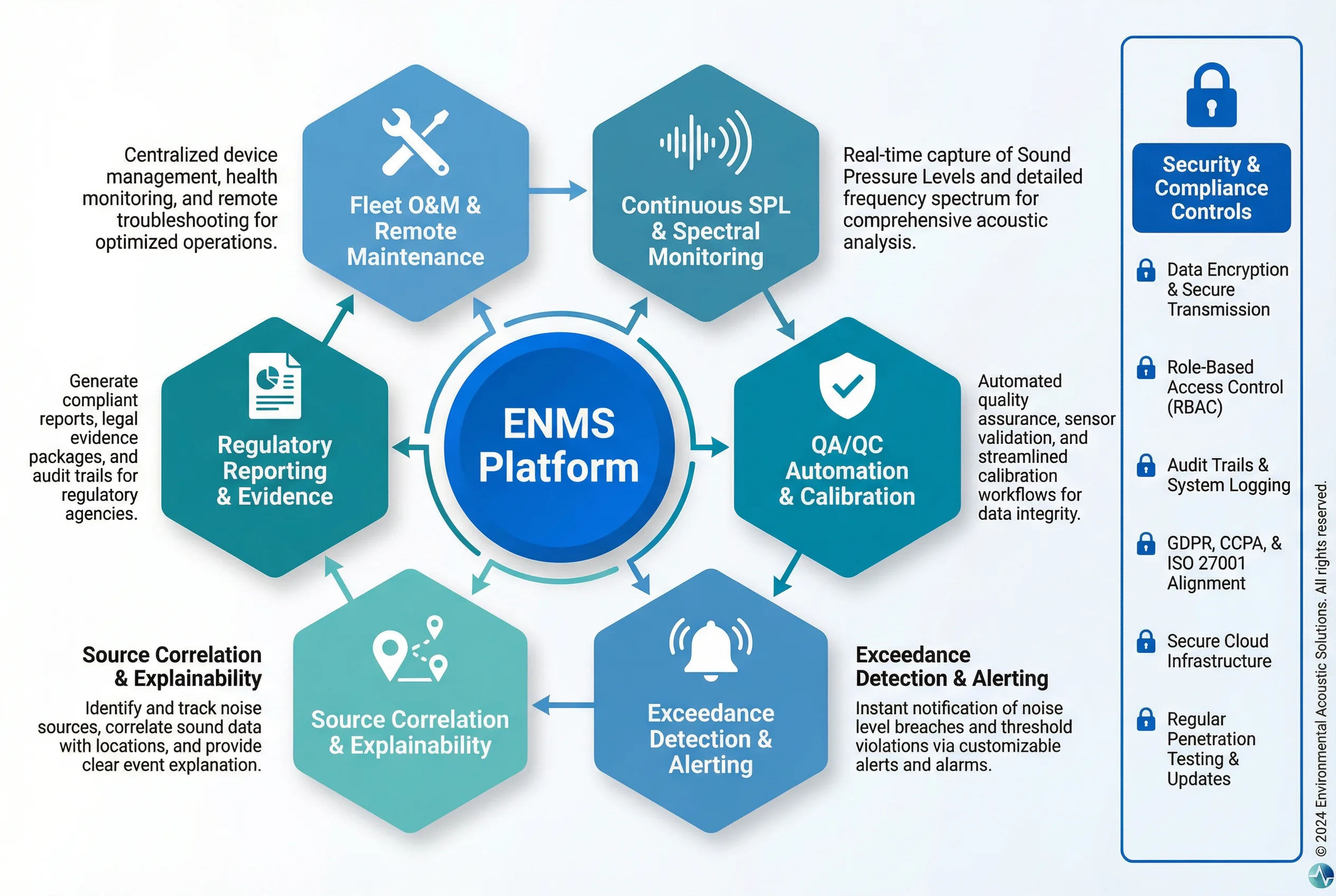
Figure 0.2: ENMS Platform Main Functions — Six Core Capabilities and Security Controls
Key Capabilities
- Continuous SPL and spectral monitoring (LAeq, Lmax, L10/L50/L90, SEL, optional 1/3-octave bands)
- Automated QA/QC with wind/rain detection, overload flagging, mic fault detection, and spectral anomaly checks
- Multi-threshold exceedance alerting with hysteresis, event grouping, and multi-channel notification
- Source correlation and explainability through spectral signatures, time patterns, and optional met/traffic data
- Regulatory reporting with signed exports, immutable audit logs, and chain-of-custody documentation
- Fleet O&M with remote diagnostics, OTA firmware updates, health KPIs, and predictive maintenance
- GIS integration for spatial noise mapping, hotspot identification, and zoning compliance overlays
- Secure device identity, TLS transport, role-based access control, and vulnerability management
- Local buffering (≥7 days) with store-and-forward for unstable cellular environments
- Integration with regulatory platforms via REST API, MQTT, SFTP, and standard GIS formats
Chapter Navigation
This guide is organized into twelve chapters covering all aspects of ENMS design, from system components and architecture through installation, quality acceptance, and ongoing operations. Use the cards below or the left sidebar to navigate to any chapter.